Every successful YouTube creator you see today—the ones with the Diamond Play Buttons and millions of views per upload—started as a small channel with zero subscribers and little recognition. It is easy to look at their current success and assume they got lucky, but luck is rarely the primary factor. The difference between those who stay small forever and those who explode into massive communities often comes down to three specific pillars: calculated strategy, ruthless consistency, and deep audience connection.
In this article, we won’t just list successful YouTubers; we will dissect the specific mechanics behind their rise. We’ll explore real case studies of creators who went from total obscurity to millions of subscribers, breaking down the exact lessons you can use to grow your own YouTube channel in 2026 by moving past basic advice and into high-level strategic execution.
Table of Contents
- Case Study 1: AngryJoeShow – Personality & Advocacy
- Case Study 2: Emma Chamberlain – The Authenticity Blueprint
- Case Study 3: MrBeast – Reinvesting to Scale
- Case Study 4: MKBHD – Authority & Consistency
- Case Study 5: TRQ – Search-Based Utility
- Deep Dive: Mastering YouTube Analytics for Intermediate Creators
- The 2026 Shift: Navigating Inauthentic Content
- Summary and Next Steps
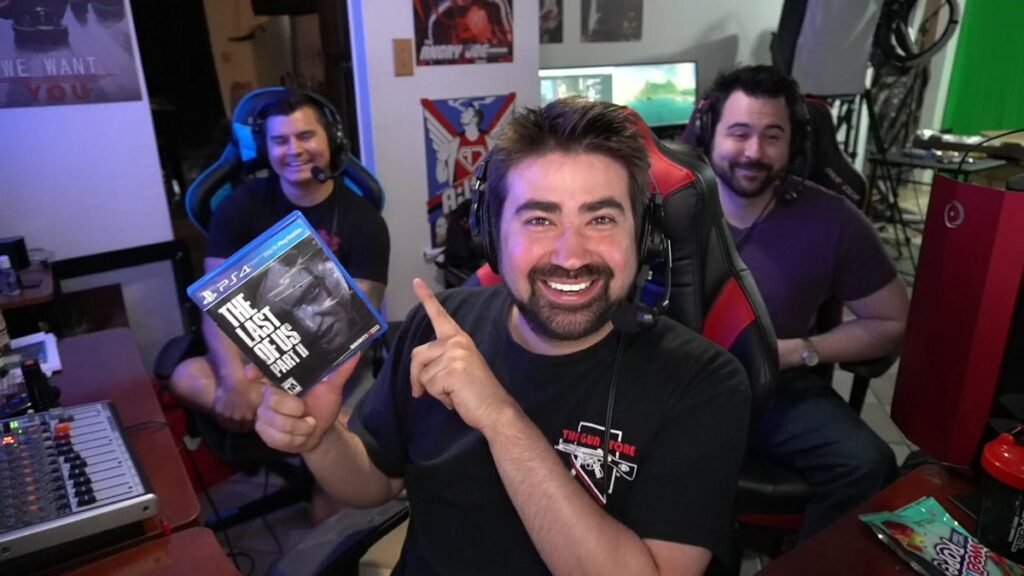
Case Study 1: AngryJoeShow – The Power of Personality & Consumer Advocacy
The Context: Joe Vargas, known as AngryJoe, launched his channel when game reviews were mostly short, dry articles on big websites like IGN. He disrupted the industry by turning reviews into full-blown variety shows. His “Angry Reviews” aren’t just opinions; they are 40-minute productions featuring costumes, skits, special effects, and a recurring cast of characters (like “Corporate Commander”).
Why It Worked: Joe understood that information alone is boring. People don’t just watch him to know if a game is good; they watch to see his reaction. He successfully blended entertainment with journalism. By acting out the frustrations of the average gamer through skits, he validated his audience’s feelings, making them feel like he was fighting for them against greedy publishers.
- Growth Strategy: He leaned into “Eventizing” his uploads. Instead of rushing to be first, he took weeks to produce high-quality, long-form reviews that served as the definitive “final word” on major game releases. He also capitalized on “disaster” games (like Ride to Hell: Retribution), knowing that watching a bad game get destroyed is often more entertaining than watching a good game get praised.
- The “Secret Sauce”: Authenticity. Even with the silly costumes, his anger feels real. He positioned himself as the “Voice of the Gamer,” building massive trust because his audience knew he couldn’t be bought by sponsorships.
Takeaway: Don’t just inform; entertain. Infuse your unique personality into standard formats to differentiate yourself from competitors who are just reading a script.
Actionable Step: Add a “Signature Element” to your content. Can you introduce a recurring segment, a specific prop, or a skit that breaks up the monotony of you talking to the camera?

Case Study 2: Emma Chamberlain – The Power of Authenticity
The Context: When Emma Chamberlain entered the scene, YouTube was dominated by the “perfect life” aesthetic—polished vlogs, high-definition makeup tutorials, and curated lifestyles. Emma went the opposite direction. She leaned into a raw, quirky, and intentionally “messy” editing style that disrupted the status quo.
Why It Worked: She broke the “fourth wall.” By including jump cuts, zooming in on her own awkward moments, and filming without makeup or massive lighting setups, she created a parasocial relationship where viewers felt like they were hanging out with a best friend, not watching a celebrity.
- Growth Strategy: Authentic, unfiltered personality combined with a relatable editing style that emphasized humor over perfection.
- The “Secret Sauce”: Relatability. She validated her audience’s feelings of teenage angst, boredom, and coffee addiction, making them feel seen.
Takeaway: You don’t need expensive gear to grow. In an era of AI and deepfakes, extreme human relatability builds fanbases faster than perfection ever could.
Actionable Step: Stop cutting out your “ums,” “ahs,” and mistakes. Try leaving in a blooper or a genuine moment of frustration in your next video to humanize yourself.
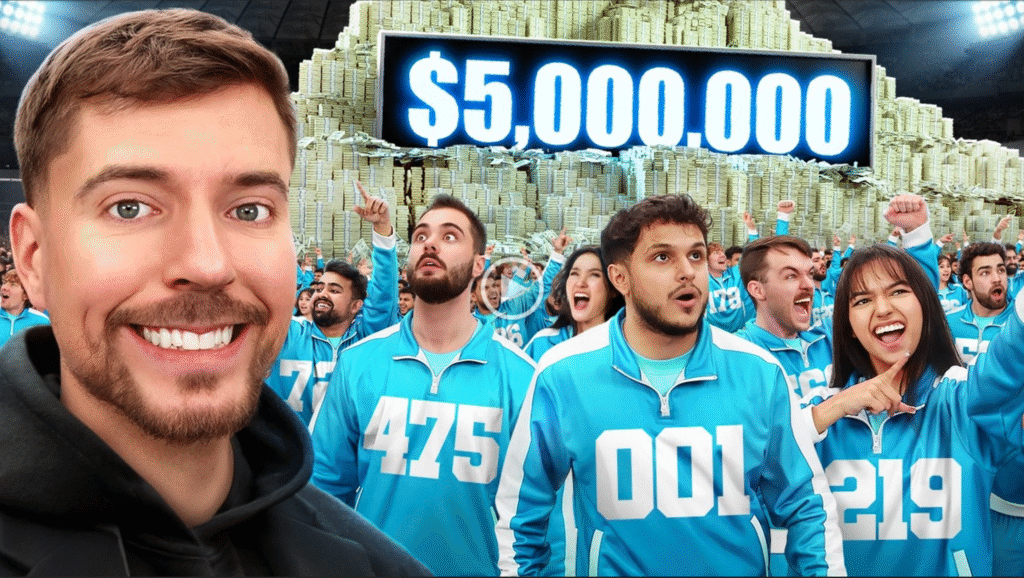
Case Study 3: MrBeast – Reinvesting to Scale Content
The Context: Jimmy Donaldson, known as MrBeast, didn’t start with millions of dollars to give away. He started with a laptop and a fascination with the analytics. If you look at his early stats on Social Blade, you can see the exponential curve didn’t happen overnight. His early viral hits were low-budget but high-effort stamina challenges, such as “Counting to 100,000” (which took over 40 hours).
Why It Worked: MrBeast treated YouTube like a business from day one. As his audience grew, he refused to take the profit. Instead, he reinvested every single dollar into better cameras, bigger props, and larger prizes. This created a snowball effect where every video was visually more impressive than the last.
- Growth Strategy: Escalating ideas and spectacle. He turned every video into an “event” that you felt you had to click on to see if he could actually pull it off.
- The “Secret Sauce”: Pacing. MrBeast revolutionized retention editing, cutting out every second of dead air to ensure the viewer never had a chance to get bored and click away.
Takeaway: Reinvest earnings (and time) back into your channel. Growth requires sacrifice; use your resources to scale your content quality rather than your lifestyle.
Actionable Step: Apply the “1% Rule.” Attempt to make one specific thing (audio, lighting, editing, or storytelling) 1% better in every single video you upload.

Case Study 4: MKBHD – Winning with Consistency and Quality
The Context: Marques Brownlee (MKBHD) is the gold standard for tech reviews, but he has been uploading for over a decade. He started as a high school student reviewing distinct features of software in his bedroom. His channel didn’t explode overnight; he grew via a slow, steady, upward trajectory.
Why It Worked: In a niche filled with speculation and hype, MKBHD provided clarity. His edge became his production quality (using cinema robots and 8K cameras) and his trustworthy, calm demeanor. He didn’t scream at the camera; he educated the audience.
Growth Strategy: Long-term commitment to producing the highest quality tech reviews on the platform. Specifically, he focused on “Search” intent. By consistently delivering accurate, unbiased takes, he became the person people had to watch before buying a new phone. This is why strong branding is essential for long-term authority.
- The “Secret Sauce”: Authority. By consistently delivering accurate, unbiased takes, he became the person people had to watch before buying a new phone.
Takeaway: Patience pays off. Building credibility in a specific niche ensures steady, “evergreen” growth that lasts for years, not just a few viral weeks.
Actionable Step: Focus on “Search” intent. Create content that answers specific questions people are asking (e.g., “Is the iPhone 15 worth it?”) to master YouTube SEO and build long-term traffic.

Case Study 5: TRQ – Winning with “Search-Based” Utility
The Context: TRQ (The Reliable Quality) is technically an auto parts brand, but on YouTube, they are a content powerhouse with nearly 1 million subscribers and thousands of videos. While most brands create boring commercials, TRQ built their empire by creating specific, step-by-step instructional videos for almost every vehicle repair imaginable. They didn’t try to go viral; they tried to be helpful.
Why It Worked: They recognized that when people have a broken car, they don’t search for “cool car videos”; they search for specific solutions like “how to replace 2010 Ford F-150 headlight.” By producing high-quality tutorials for thousands of specific make/model combinations, they captured a massive amount of “high-intent” search traffic that never goes away.
- Growth Strategy: Mass-scale “Long-Tail” SEO. Instead of making one video about “How to change brakes,” they made hundreds: “How to change brakes on a Honda Civic,” “How to change brakes on a Chevy Silverado,” etc.
- The “Secret Sauce”: Trust through Utility. They don’t aggressively push their products. They simply show you exactly how to do the job yourself. Because they gave you the knowledge for free, you feel inclined to buy the parts from them.
Takeaway: Solve specific problems. You don’t always need to be entertaining; sometimes being the most useful person in the room is enough to build a massive audience.
Actionable Step: Adopt the “Answer Engine” mindset. Type your niche into the YouTube search bar and see what questions auto-complete. Make a video that answers one of those questions directly and concisely.
Deep Dive: Mastering YouTube Analytics for Intermediate Growth
To move from “getting lucky” to “growing systematically,” you must understand the numbers. In 2026, the YouTube algorithm has shifted from simple watch time to Viewer Satisfaction. According to recent Think with Google data, 70% of watch time is now driven by personalized recommendations.
Moving Beyond “Views”: The Satisfaction Metric
YouTube now prioritizes “Satisfied Watch Time.” Consequently, a video with 10,000 views and a high “satisfied” rating (measured via surveys and return behavior) is more valuable than 100,000 views with low retention. Specifically, look at your New vs. Returning Viewers graph in YouTube Studio. If you aren’t bringing people back, your channel will eventually plateau.
Analyzing CTR and AVD Clusters
Click-Through Rate (CTR) and Average View Duration (AVD) are the twin engines of growth. However, they must be analyzed together. For instance, a high CTR with low AVD tells the algorithm that your thumbnail was “clickbait,” which can harm your reach. Conversely, a high AVD with low CTR means you have a great video but a boring package. You should aim for a “CTR-to-AVD” balance that keeps the session moving.
Session Depth and Returning Viewer Loyalty
YouTube rewards creators who keep viewers on the platform. Therefore, if your video leads to a viewer watching three more videos (even if they aren’t yours), the algorithm views your content as a “Session Starter.” To illustrate, use end screens and playlists to “chain” your content together. This signals to the recommendation system that your channel is a high-value entry point for users

The 2026 Landscape: Navigating Policy and AI
As we move further into 2026, the rise of AI-generated content has led to new challenges. Specifically, YouTube has initiated a massive inauthentic content crackdown to protect viewers from low-effort, AI-spun videos. Consequently, intermediate creators must double down on “human-centric” elements.
Balancing AI Tools with Human Connection
While you can use AI for script outlines or thumbnail ideas, the “final mile” of your video must feel human. Furthermore, recent statistics from Wytlabs show that channels with a face and a unique voice are outperforming faceless AI channels by 40% in terms of subscriber loyalty. Therefore, focus on your “Micro-Niche Moat”—the specific combination of your personality and expertise that an AI cannot replicate.
Summary: Your Road to the Next Milestone
Growing a YouTube channel in 2026 isn’t about hitting the lottery. Instead, it is about strategy, consistency, and human connection. By studying YouTube creator case studies like MrBeast or MKBHD, we see that success is built on reinvesting in quality, serving search intent, and being unapologetically authentic. To illustrate this, remember that your analytics are a map, not a judge. Use them to identify what your audience loves and do more of it.
If you are ready to take your channel to the next level, you need the right tools and community. Subscribe to the YT Torials newsletter at for weekly deep dives into the algorithm. Also, make sure to follow the YT Torials YouTube page for video breakdowns of these strategies in real-time. Start today—your next viral hit is only one upload away!

No responses yet