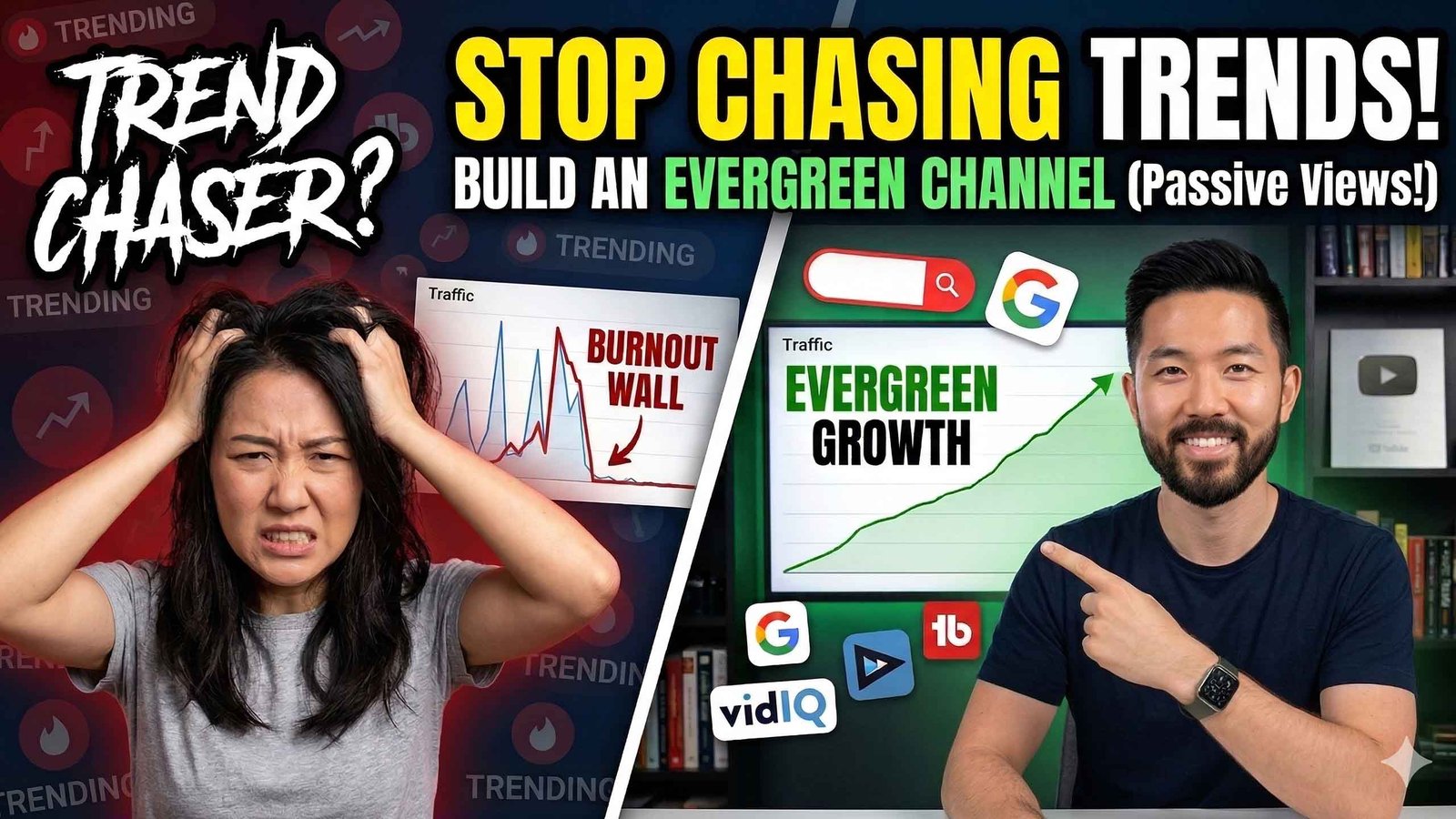
Most creators hit a “burnout wall” because they chase trends. You post a video, it gets views for 48 hours, and then it dies. If you stop uploading, your channel stops growing. Consequently, you become a slave to the algorithm.
In this guide, I will show you how to stop being a “Broadcaster” and start being a “Librarian.” We will build a catalog of assets that generate views, leads, and revenue while you sleep. We will cover manual discovery, the “Google Double-Dip,” and forensic tool checks to prove a topic will last for years.
Table of Contents
- Phase 1: The Manual Discovery
- The Google Double-Dip Power Move
- Phase 2: The Forensic Validation
- The Zombie Check: Using VidIQ
- The Heartbeat Check: Using TubeBuddy
- The Accelerator: Morningfame
- Phase 3: Strategy and Production
- The Long-Tail Modification
- The Timelessness Rule
- The First 60 Words Hack
- Summary and Final Thoughts
Phase 1: The Manual Discovery
The first step to building a sustainable channel is defining what “Evergreen” actually means. Essentially, evergreen content solves a specific problem that people will always have. For example, a video on “How to tie a tie” is evergreen. People will be searching for that in 2026, 2030, and beyond.
Step 1: Search Intent and Autocomplete
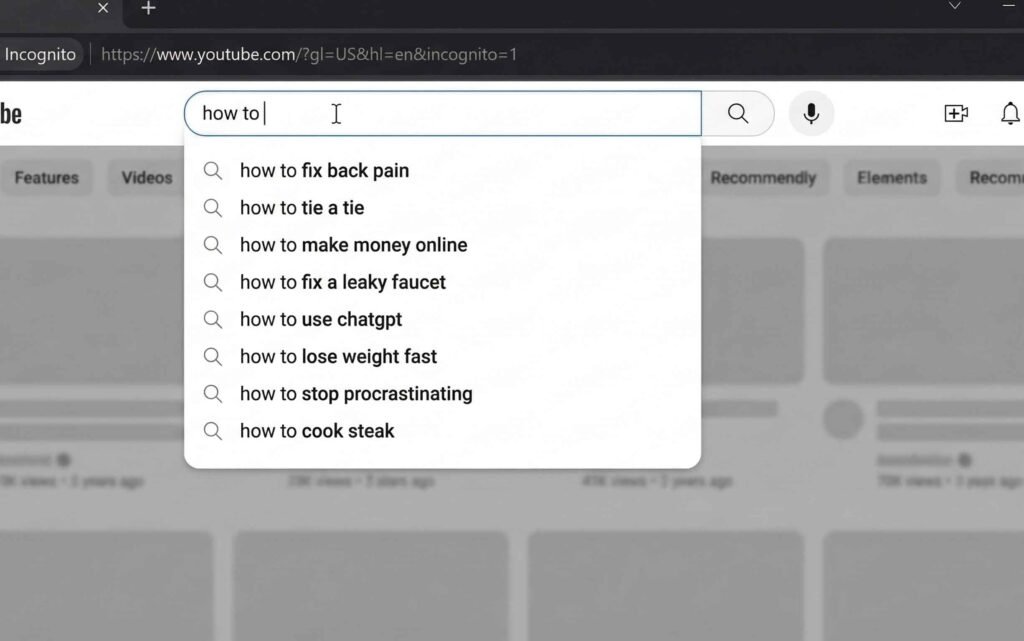
To find these topics, you must start fresh. Open an Incognito window in your browser. Specifically, we do this to remove your personal watch history bias. If you search from your regular account, YouTube will show you what you like, not what the world is searching for.
Go to the YouTube search bar and type the core verb of your niche. If you run a fitness channel, type “How to fix…” and then pause. Immediately, YouTube will start guessing what you want to say. These guesses are not random. Instead, they are the most common searches happening right now.
- Look at the specific phrasings.
- Are they asking “how to fix back pain” or “lower back pain exercises”?
- Write down three of these predictions.
Furthermore, these autocomplete suggestions represent “unmet needs.” If YouTube is suggesting a very specific phrase, it means thousands of people are typing it. If you can answer that specific question, you have a winning topic.
The Google Double-Dip Power Move
Before we validate these topics on YouTube, there is one “Power Check” that 90% of creators ignore. In fact, this is the secret to getting traffic from outside of YouTube. Take that keyword you found and plug it into a standard Google Search.
Look at the results page very carefully. Do you see a “Video Pack” or a carousel of videos at the very top? If so, you have hit the jackpot. This means Google’s algorithm thinks a video is the best way to answer that question.
Why the Double-Dip Matters
When you rank for a keyword that triggers a video carousel, you aren’t just a YouTuber anymore. Consequently, you become a global resource. You will get traffic from the entire internet, not just people browsing the YouTube app. Moreover, ranking on Google often provides a much higher “CPM” (money per thousand views) because the traffic is highly intentional.
If you only see text articles on the first page, it will be much harder to break through. Therefore, you should always prioritize keywords that trigger this video carousel. This is how you master YouTube growth lessons that the pros use to scale.
Phase 2: The Forensic Validation
Now that we have a list of ideas, we need to prove people are actually watching these topics today. We don’t want to guess; we want forensics. Specifically, we want to know if these topics have “staying power.”
Step 2: The “Zombie Check” (VidIQ Method)
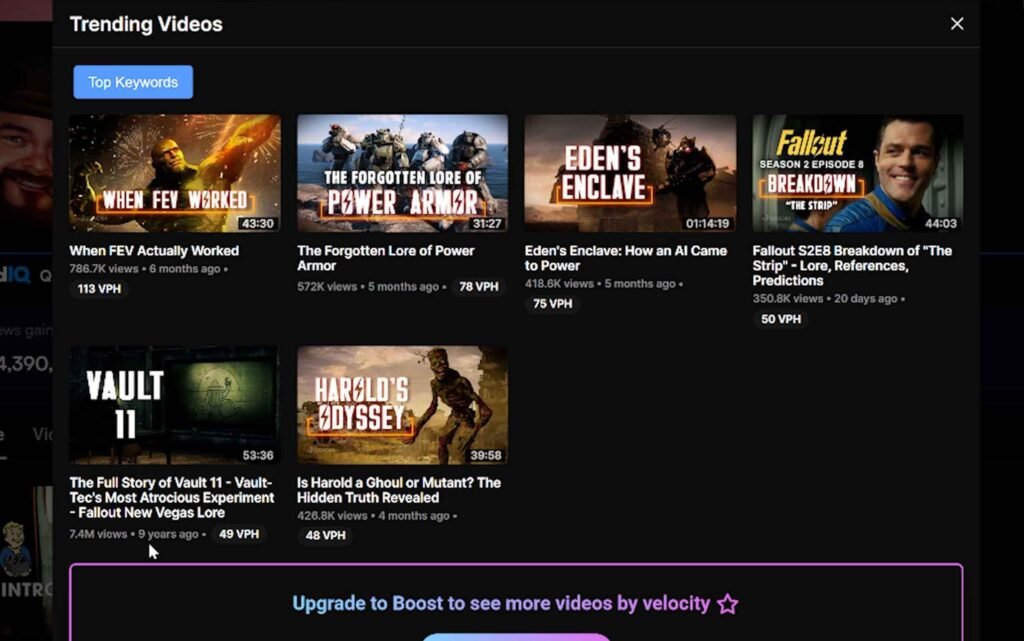
I call this the “Zombie Check.” To do this, I use the VidIQ extension. First, go to a competitor’s channel in your niche. Click on their “Trending” tab.
We are looking for a very specific type of video. We want an old video—maybe uploaded two or three years ago—that is still getting high “VPH” (Views Per Hour). For instance, if you see a video from 2021 that is still getting 50 or 100 views every single hour, that is a Zombie Video.
Clearly, it is still alive. It is still “eating” views long after the initial upload buzz has died. This proves the topic is evergreen, not just the trend. If a video can stay relevant for three years, it can stay relevant for ten.
Step 3: The “Heartbeat Check” (TubeBuddy Method)
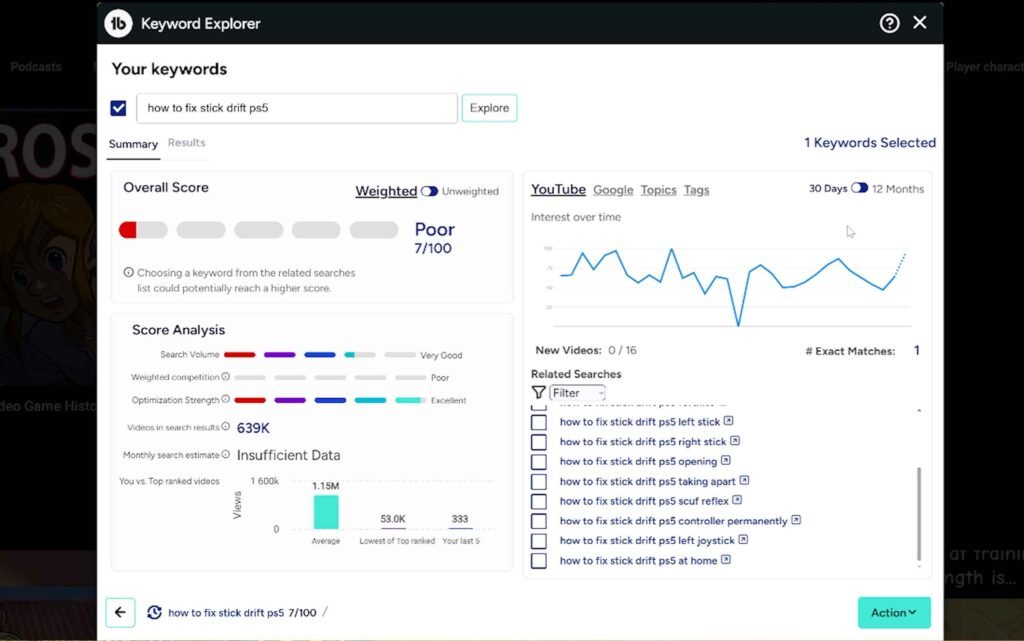
Next, we need to make sure this isn’t just a temporary spike. To achieve this, I use the TubeBuddy Keyword Explorer. I’ll type in the topic and look at the “Interest Over Time” graph.
This graph is the most important piece of data you will ever see. Typically, if the graph looks like a heartbeat spike—a flat line, a huge jump, and then back to flat—that is a trend. However, you should avoid these if you want to be a Librarian. Trends are for Broadcasters.
Instead, we want a line that is flat or shows a slow, steady climb. This steady line means people search for this in July, in December, and next year. According to Google Search Central, providing consistent value on “how-to” topics is the best way to maintain long-term search visibility.
Step 4: The Accelerator (Morningfame)
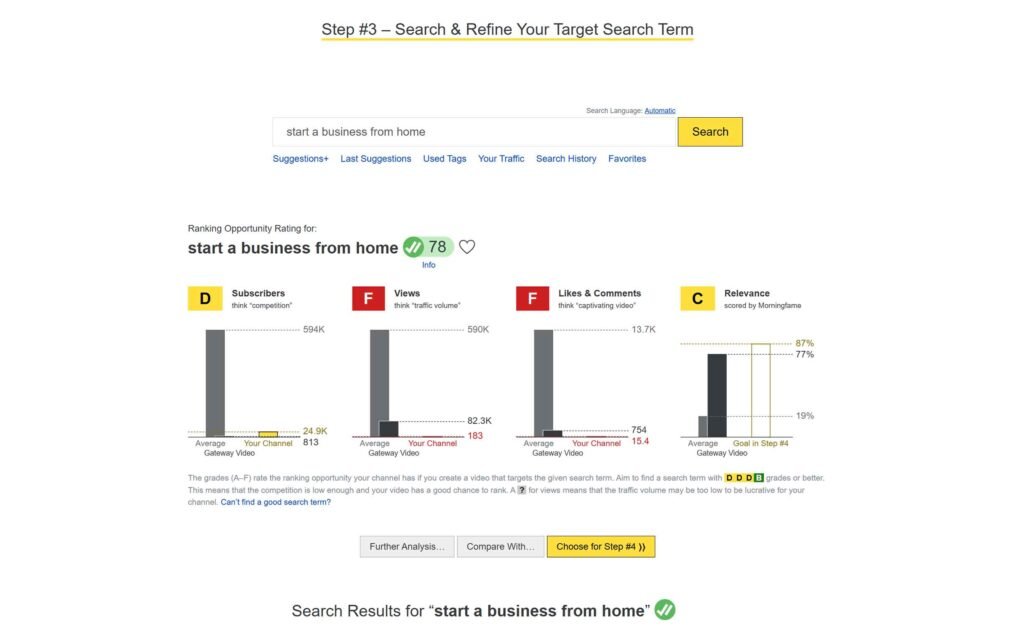
If you don’t want to click back and forth between Google and YouTube, you can use an tool like Morningfame. Essentially, this tool visualizes the “Double Dip” we talked about earlier.
It shows two bars: one for YouTube search volume and one for Google search volume. Additionally, it tells you if small channels are currently ranking for that topic. This is the ultimate “green light” for new creators. If a channel with 500 subscribers is ranking #1 for a major keyword, you can too.
Phase 3: Strategy and Production
Finding the keyword is only half the battle. Consequently, you must know how to package it. Even the best keyword won’t save a video that feels “dated” or “old” two months after it is posted.
The Long-Tail Modification
If you find a topic that is perfect but the competition is too high, do not quit. Instead, you need to “Long-Tail” it. This means making the keyword more specific.
For example, do not try to rank for “How to code Python.” That is too broad, and the giants in the niche already own that space. However, you could try “How to code Python for data analysis beginners.”
You have lowered the total search volume, but you have increased your chance of winning. Ultimately, ranking #1 for a small keyword is infinitely better than ranking #50 for a massive keyword. No one clicks on the second page of search results. By being specific, you avoid YouTube’s inauthentic content crackdown by providing genuine, targeted value.
The Timelessness Rule
Here is a quick warning on production. Keyword research is useless if you “date” your content. Specifically, when you film this evergreen video, do not mention the current year or recent news events in your audio.
For instance, do not say, “In today’s news…” or “Happy Summer 2026!” If someone watches that video in the winter of 2027, they will immediately feel like the information is old. Consequently, they will click away.
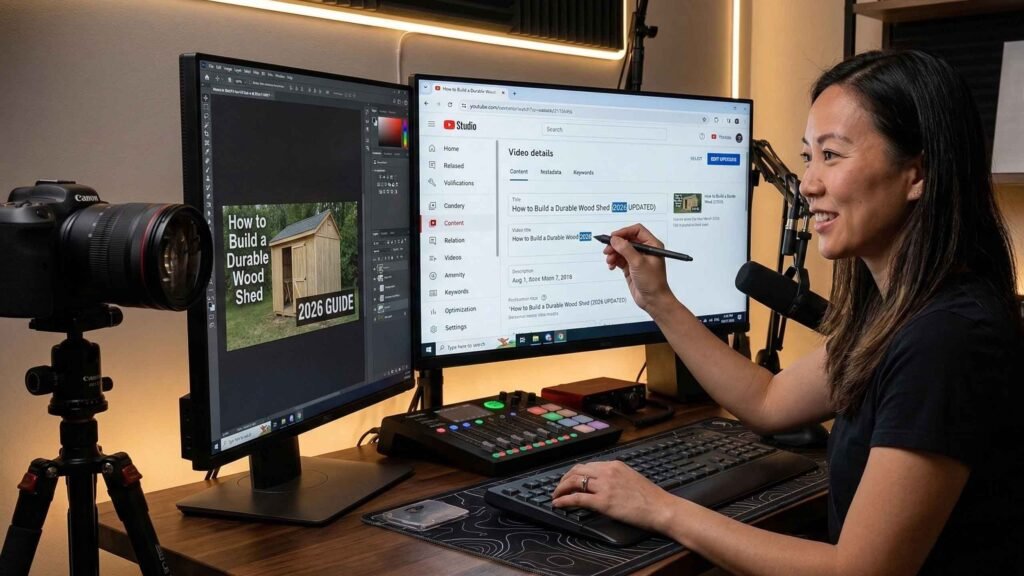
You might be thinking, “But should I put the year in the title?” Yes, absolutely. The Title is the “Packaging,” but the Video is the “Product.” You should update your Title and Thumbnail every year to keep it looking fresh. However, you never want to have to re-film the video itself. Keep the audio neutral so the asset lasts forever.
The “First 60 Words” Hack
Finally, once you have the video, where do you put the keyword? Importantly, do not rely on tags. The algorithm barely looks at them anymore. Instead, you need to weave the keyword into the first sentence of your description.
YouTube’s auto-captioning system also “listens” to your video. Therefore, you must say the keyword clearly in the first 30 seconds of your spoken audio. If you say it and write it in the first 60 words of the description, you are giving the algorithm a clear signal.
Specifically, you are telling the AI exactly what this content is. Don’t be subtle—be literal. This helps the AI categorize your video faster, leading to more “Suggested” views alongside your search traffic. According to data from HubSpot, videos with keywords in the first few sentences of the description have a significantly higher click-through rate.
Summary and Final Thoughts
Building an evergreen library is the only way to achieve true freedom on YouTube. First, use Incognito mode to find what people actually need. Next, use the Google Double-Dip to ensure you get traffic from across the web. Then, use tools like VidIQ and TubeBuddy to perform “Zombie” and “Heartbeat” checks to ensure long-term interest. Finally, keep your content timeless and optimize your first 60 words. By following these steps, you stop chasing views and start building an empire.
If you want more deep dives into the mechanics of YouTube success, subscribe to the YT Torials newsletter at https://yttorials.blog/newsletter/ and follow our YouTube channel at @yttorials for weekly video breakdowns!
Follow YT Torials:
Sign up to the YT Torials Newsletter


No responses yet