
The digital landscape has shifted dramatically over the last year. In 2026, the phrase on every creator’s lips is “AI Slop.” It is a term used to describe low-quality, mass-produced content that lacks a human soul. As we have seen, AI has exploded on YouTube, leading to millions of automated uploads every single day. However, this flood of content has forced the platform to take drastic measures. If you want to keep your channel monetized and growing, you must understand how to separate yourself from the machines. This guide provides the exact blueprint for staying high-value in an automated world.
Table of Contents
- Defining the “Slop” Crisis of 2026
- The Inauthentic Content Crackdown
- The Human-in-the-Loop (HITL) Framework
- Case Study 1: The $30k/Month Bible Channel Collapse
- Case Study 2: Scaling to 100k with “Niche Authority”
- Mastering Voiceovers: Moving Beyond Robotic Tones
- Visual Authenticity: Elevating Your B-Roll Strategy
- Scripting for Humans: Breaking the AI “Fingerprint”
- Metadata and Thumbnails: Avoiding the Plastic Look
- Technical Markers: C2PA and SynthID Tracking
- Surviving the Monetization Review
- Summary and Next Stepsb
Defining the “Slop” Crisis of 2026
In 2026, YouTube defines “AI Slop” as content that lacks original thought or significant human intervention. Specifically, this refers to videos that are indistinguishable from thousands of others in the same niche. Consequently, the algorithm now prioritizes E-E-A-T (Experience, Expertise, Authoritativeness, and Trustworthiness) more than ever before. If your video feels like a generic Wikipedia summary read by a computer, it will be flagged. Furthermore, the system now uses advanced pattern recognition to spot channels that use the same “one-click” generation tools.
The problem for creators is that the definition of “slop” changes as AI gets better. In 2024, a basic AI voice was acceptable. However, in 2026, even the most advanced voices can be flagged if the pacing is too perfect. Therefore, the goal is not just to make “good” content but to make “human” content. Specifically, you want to show the algorithm that a real person made creative choices at every step. By doing this, you protect your channel from the automated filters that are deleting thousands of channels every month.
The Inauthentic Content Crackdown
The most significant shift for creators came when YouTube updated its core policies. It is now officially called the inauthentic-content-crackdown, and it has much broader reach than previous rules. This policy specifically targets content that is easily replicable at scale. For example, if you use a template to produce 50 videos a day with only minor changes in text, you are a target. Specifically, the algorithm looks for “reused visual patterns” and “identical script structures.” Furthermore, you must now disclose use of altered or synthetic content to maintain transparency with your audience.
Furthermore, this policy allows YouTube to demonetize entire channels without warning if the “bulk” of the content is templated. Previously, creators could often hide behind “fair use” or “educational” labels. However, the new 2026 standards focus on the effort and judgment of the creator. Specifically, the system looks for “original commentary” that adds context to the AI-generated visuals. If you fail to add this human layer, your channel is viewed as a spam operation. Consequently, many large “faceless” channels have seen their revenue disappear overnight. Therefore, understanding these rules is vital for anyone trying to build a career on the platform.
![A circular vector diagram of the Human-in-the-Loop (HITL) system [Image 9.png]. Steps: [AI Content Generation] -> [Human Review & Personalization (with Sarah icon practicing editing)] -> [AI Synthesis (Voice/Video)] -> [Human Final Polish]. Uses brand colors.](https://yttorials.blog/wp-content/uploads/2026/03/avoid-slop-copy-05-1024x576.jpg)
The Human-in-the-Loop (HITL) Framework
To stay safe, you must adopt the Human-in-the-Loop (HITL) framework. This strategy ensures that a human makes every critical creative decision in the production process. For instance, you might use an AI to brainstorm 50 video titles. However, you should be the one to pick the winner and rewrite it to match your specific style. This is a core part of learning how to grow your YouTube channel sustainably.
Instead of letting a bot build your entire timeline, you should assemble the video yourself. This allows you to add “micro-edits” that bots often miss. Specifically, these are small timing changes, sound effects, or unique text overlays that signal to the algorithm that a real person was involved. By adopting a tool that handles tedious initial trims—as outlined in this Gling review—you can focus entirely on micro-edits and creative storytelling.”
Ultimately, this human touch acts as a digital signature that AI detectors cannot replicate. Furthermore, it helps you build a more relatable brand that viewers will actually want to subscribe to. Specifically, humans crave connection, and bots cannot provide that. Consequently, the HITL method is the only way to “algorithm-proof” your content for the long term.
Case Study 1: The $30k/Month Bible Channel Collapse
One of the most famous examples of the 2026 crackdown is a large “Bible Stories” channel. This channel had 588,000 subscribers and was earning $30,000 per month from AdSense. The content was visually stunning, featuring AI-generated cinematic images and a deep, narrator-style AI voice. On the surface, it looked like high-quality production.
What went wrong? YouTube demonetized the entire channel for “Inauthentic and Mass-Produced Content.” Specifically, the algorithm identified a pattern of interchangeability. Because the creator used the same AI prompt templates for every video, the channel felt like an assembly line. Furthermore, the “script fingerprint” was identical to hundreds of other low-effort religious channels. Consequently, even though the videos were beautiful, they were labeled as slop. This proves that high production value is not enough; you must have a unique human perspective to stay safe. Therefore, simply having “good graphics” will not save you if your process is entirely automated.
Case Study 2: Scaling to 100k with “Niche Authority”
In contrast, a small “Personal Finance” channel grew from zero to 100,000 subscribers in just six months during late 2025. This creator used AI for 80% of the production but followed a strict HITL workflow. Specifically, they used AI to analyze Reddit threads for “unanswered questions” in the finance niche. They then used Speech-to-Speech AI to clone their own voice, which kept the natural human emotion and pauses.
By adding their own personal commentary on current news, they avoided the “reused content” filter. Furthermore, they filmed five seconds of themselves at the start of every video. As a result, their engagement rates were 40% higher than their competitors. This case shows that AI is a massive advantage if you use it to solve real audience problems. Specifically, the creator’s unique “voice” and choice of topics made the AI tools invisible to the algorithm. Consequently, they were able to scale quickly without ever being flagged as slop.
![Close-up of the specific 2026 YouTube Studio upload page in dark mode [Image 8.png]. A mouse cursor is hovering and ticking the required checkbox clearly labeled: "Synthetic Media: This content is meaningfully altered or synthetically generated." Disclose altered or synthetic content.](https://yttorials.blog/wp-content/uploads/2026/03/avoid-slop-copy-04-1024x576.jpg)
Mastering Voiceovers: Moving Beyond Robotic Tones
Voiceovers are often the first thing the algorithm checks for quality. In fact, YouTube’s 2026 update includes a “Vocal Texture Analysis” that can identify generic, unedited text-to-speech. If your narrator sounds flat and lacks breath sounds, you are at risk. Furthermore, viewers can subconsciously sense when a voice is not “real,” leading to lower retention rates.
To fix this, consider these advanced techniques:
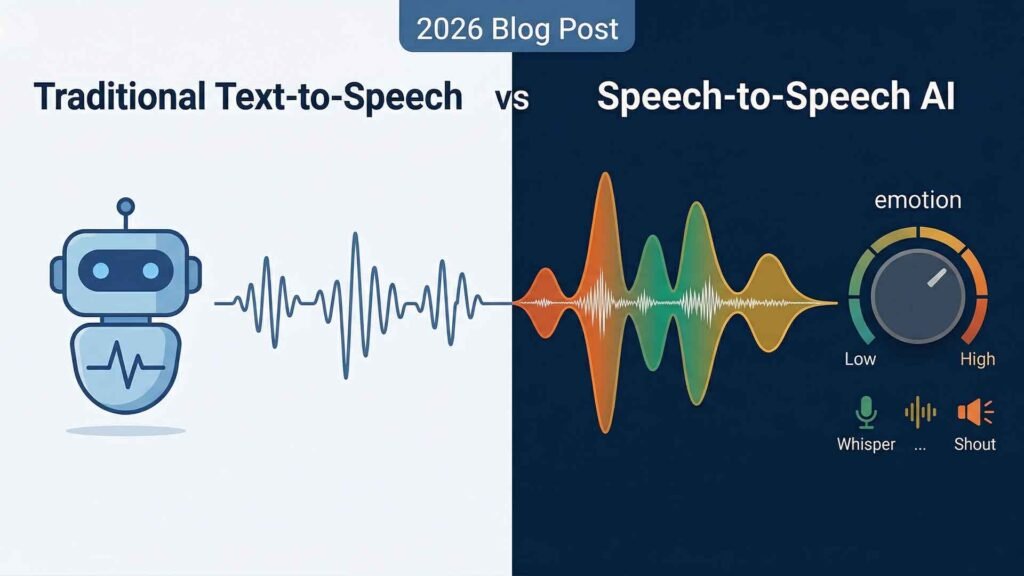
- Speech-to-Speech (S2S): Instead of typing text, record your own voice reading the script. Then, use an AI to “convert” your voice into a professional-sounding narrator. This keeps your natural pacing, emotion, and emphasis.
- Vocal Fry and Inflection: Use tools that allow you to manually adjust the pitch and speed of specific words. Specifically, emphasize the most important parts of your sentence just like a human would.
- Ambient Noise Layering: Add a very subtle layer of room tone or “brown noise” under your voiceover. This makes the audio feel less sterile and more like it was recorded in a physical room.
- The “Human Intro”: Always record the first 30 seconds of your video with your actual voice. Even if the rest of the video uses AI assistance, this initial human connection builds massive trust.
Ultimately, the goal is to create “vocal friction.” Specifically, humans stutter, pause, and change their tone based on excitement. Bots do not do this naturally. Therefore, adding these “imperfections” is actually a high-level SEO strategy in 2026.
![Close-up of Sarah's hand (from Image 1, matching rings) dragging a cinematic 4K video clip from a folder labeled "Custom B-Roll" [Image 7.png] into a complex video editor timeline (Premiere Pro update) filled with multi-layered audio, video, and effects. Clear futuristic UI.](https://yttorials.blog/wp-content/uploads/2026/03/avoid-slop-copy-01-1024x576.jpg)
Visual Authenticity: Elevating Your B-Roll Strategy
Generic B-roll is a hallmark of AI slop. If you use the same stock footage of a “man thinking” that five other channels used this week, you will be penalized. Specifically, the algorithm maps every frame and compares it to a global database. If your video is 90% “stock,” it will be ranked lower. Instead, you need a multi-layered visual strategy.
Start by mixing sources. For example, combine high-quality stock footage with custom AI-generated clips that you have personally prompted and edited. Additionally, you should record your own screen or use your phone to capture “real-world” shots of your environment. This creates a visual “texture” that is impossible for a bot to automate. Furthermore, use tools like Sora or Veo to generate specific scenes that do not exist on stock sites.
Moreover, pay attention to the “4-Second Rule.” Never let a single clip play for more than four seconds without adding an overlay, a zoom, or a transition. By constantly changing the visual field, you keep the viewer’s brain engaged. Specifically, this higher engagement tells YouTube that your content is valuable. Consequently, your “average view duration” will rise, which is the best defense against the slop flag. Ultimately, your goal is to make a video that looks like it was edited by a professional human editor.
Scripting for Humans: Breaking the AI “Fingerprint”
AI-generated scripts often have a specific “smell.” They tend to use words like “tapestry,” “delve,” “comprehensive,” and “unlock.” If your script sounds like a corporate brochure, your audience will tune out. Consequently, you must learn to “de-bot” your scripts before recording. Specifically, the YouTube algorithm now scans transcripts for these “AI linguistic markers.”
Try the “ELI5” (Explain Like I’m Five) method for your first draft. Afterward, go back and add “personality markers.” These are personal opinions, jokes, or references to current events that occurred after the AI’s training cutoff. Furthermore, you should verify every fact manually. AI is notorious for “hallucinating” data, and a single factual error can ruin your channel’s credibility.
Additionally, use a “Hook, Meat, Payoff” structure. Specifically:
- The Hook: A human-written sentence that addresses a specific pain point.
- The Meat: The information, broken up by personal anecdotes.
- The Payoff: A unique conclusion that summarizes your personal take on the topic.
By following this structure, you ensure that the core value of the video comes from you, not the machine. Therefore, even if the AI helped you gather the facts, the story remains human.

Metadata and Thumbnails: Avoiding the Plastic Look
Many creators focus so much on the video that they forget the metadata. AI slop channels often use AI-generated thumbnails that look “too perfect.” These images usually have weird artifacts, like a person with six fingers or glowing skin that looks like plastic. Specifically, the algorithm can detect these “diffusion patterns” and may suppress the video before it even gets views.
Instead, use AI to generate the base of your thumbnail, but edit it heavily. Specifically, add high-contrast text and “cut-outs” of real objects. This blend of AI and human editing creates a “clickable” image that feels authentic. Furthermore, your description should not be a keyword-stuffed mess. Write a short, engaging summary that sounds like it was written by a friend.
Moreover, avoid using AI-generated titles that sound like “The Ultimate Guide to X.” Instead, use titles that spark curiosity or emotion. Specifically, a title like “I Tried AI for 30 Days and Here is the Truth” will always outperform “A Comprehensive Analysis of AI Trends.” Ultimately, your metadata is the first thing a human—and the algorithm—sees. Consequently, if it looks like slop, they will assume the video is slop.
Technical Markers: C2PA and SynthID Tracking
In 2026, YouTube has implemented invisible watermarking to detect AI involvement. Specifically, they use SynthID and the C2PA standard to track the history of a video file. This means the algorithm knows exactly which parts of your video were generated by AI and which were captured by a camera. Consequently, you cannot hide your use of AI from the platform.
Instead of trying to “trick” the system, you should lean into transparency. YouTube now requires creators to check the “Altered Content” box if the video looks realistic but was generated by AI. Specifically, this applies to deepfakes or hyper-realistic landscapes. However, if you are using AI for minor edits, lighting, or script assistance, you do not need to disclose it.
Furthermore, ensure your technical quality is high. Specifically:
- Resolution: Always upload in 4K.
- Audio: Use a high bitrate to ensure the “vocal texture” is preserved.
- Frames: Stick to 30 or 60 FPS to avoid the “ghosting” often seen in cheap AI video tools.
By following these technical standards, you signal to YouTube that you are a premium creator. Specifically, slop creators usually cut corners on technical specs. Therefore, high-quality rendering is a simple way to prove you are serious.
Surviving the Monetization Review
If your channel is ever flagged for “Reused Content” or “Inauthentic Content,” do not panic. In 2026, YouTube allows for a video appeal process. Specifically, you must record a “Behind the Scenes” video showing your creative process.
In this video, you should show:
- Your project file in your video editor (Premiere, Resolve, etc.).
- The different layers of your audio, including your original recordings.
- Your script notes and how you edited the AI output.
- Your B-roll sources and how you combined them.
If you have followed the HITL framework, this appeal will be easy. Specifically, you will have plenty of proof that you are the “director” of the content. However, if you used a “one-click” generator, you will have nothing to show. Consequently, you will lose your channel. Therefore, the extra 20 minutes of work you do on each video today is actually an insurance policy for your future income. Ultimately, the algorithm wants to reward creators, not robots.
Summary and Next Steps
To avoid being flagged as AI slop, you must prove to the algorithm that you are a human creator. This involves fixing robotic voiceovers, diversifying your B-roll, and writing scripts with a unique voice. Specifically, you must move away from automated “factory” processes and move toward a “Human-in-the-Loop” workflow. Remember, AI is a powerful assistant, but it should never be the “boss” of your channel. Furthermore, by following the 2026 guidelines for disclosure and technical quality, you can build a channel that is safe from any future updates. Consequently, the creators who focus on quality over quantity will be the ones who dominate the platform.
If you are ready to take your channel to the next level, subscribe to the YT Torials newsletter for the latest algorithm updates. You can also find deep-dive tutorials on our YT Torials YouTube page (@yttorials)!

No responses yet