
What is worth more to the YouTube algorithm: 1,000 Likes or 50% Retention? Most small creators spend their time chasing likes, but the math proves they are making a massive mistake. When you pause your video to beg for engagement, you are trading “King Retention” for “Tie-Breaker Likes.” Consequently, you are essentially trading gold for copper.
In this guide, we will break down the hierarchy of metrics that actually matter. We will look at why 12% retention is a death sentence for your channel. Furthermore, we will explore exactly where the new “Hype” feature fits into your growth strategy. This information is not just a guess. In fact, it comes from the official engineering logic used by YouTube’s own team to rank your content.
The History of the YouTube Machine
To understand the current algorithm, you must first understand its history. It has always been a constant cat-and-mouse game between creators and the code. Over the years, the system has evolved through three distinct eras.
Era 1: The Click Era
In the early days, the system optimized for Views. Therefore, if a video got clicks, it got promoted. Unfortunately, creators exploited this with extreme clickbait. Because the system didn’t care what happened after the click, the platform became filled with low-quality content.
Era 2: The Watch Time Era
Eventually, YouTube fought back and started optimizing for Watch Time. During this time, the obsession with Likes peaked. Back then, the AI was simpler. It needed the Like button to verify that the long Watch Time was actually “Good.” However, YouTube eventually realized that just because someone is watching, it doesn’t mean they are happy.
Era 3: The Satisfaction Era
In 2019, the engineers quietly made a change. They realized that Watch Time alone wasn’t enough. So they handed the keys to a new AI system that looks for a “Silent Signal” on top of retention. This system doesn’t just track if you watched; it tracks if you were satisfied enough to return.
Rank #0: The Gatekeeper (Click-Through Rate)
Before we look at the internal ranking, you must understand that the “Click” is the gatekeeper to the entire system. You cannot have retention or likes unless someone clicks the video first. Therefore, we call the Click-Through Rate (CTR) Rank #0. It is the interest test.
If you pass this test with a great thumbnail and title, you move into the actual hierarchy. However, if people ignore your thumbnail, the video dies immediately. It does not matter how good the editing is if nobody walks through the door. To master this first step, check out our guide on how to increase your click-through rate.

Tier 1: The Foundation of Growth (Satisfaction & Retention)
These are the metrics that decide if your video will go viral. They tell the AI that your content is genuinely helpful and high-quality.
1. Average View Duration (AVD) & Retention
Retention is still King. This measures how long a viewer stays on your video. If you keep someone for 15 minutes of a 20-minute video, you are winning. High retention tells the algorithm that your content delivers on its promise. In contrast, if everyone leaves after 30 seconds, YouTube stops showing the video to new people.
2. The Satisfaction Survey (The Veto)
This is what engineers call the “Ground Truth.” YouTube sends millions of surveys asking, “How satisfied are you with this video?” If a viewer gives you a 1-star rating, it acts as a “Veto.” This overrides every other positive signal. According to official YouTube support data, satisfaction is now a primary signal for recommendations.
3. The Re-Watch Signal
In 2026, the AI tracks when people rewind a video to see a part again. This “Re-Watch” is a massive signal of value. It proves your content is dense and interesting. If people watch a segment twice, the AI assumes the video is twice as valuable for that specific moment.
Tier 2: The Viral Multipliers (Ecosystem Growth)
These metrics are powerful because they help the entire platform. YouTube rewards you for bringing in new users or keeping them moving between different types of content.
4. Video Embedding (The Web Integrator)
Embedding your video on an external website (like this blog!) is one of the strongest “Authority” signals you can send. When a video is embedded, it proves to YouTube that the content is valuable enough to be used as a reference elsewhere on the internet.
Additionally, if that embedded video is watched on a high-traffic site, it creates an “External Session Start.” YouTube sees this as you bringing a user from the wider web back into the YouTube ecosystem. This is incredibly high-value for your “Advertiser Score.”
5. Remixing & Clipping (High-Friction Support)
Remixing is the highest-friction action a viewer can take. When someone “Remixes” your long-form video into a Short, they are creating a free advertisement for you. Every remix includes a link back to your original video. Similarly, “Clips” allow viewers to share a specific moment.
6. Sharing (The External Recommendation)
A share is a high-intent signal. If a user stops watching to send your link to a friend, they are personally endorsing your quality. Because this often brings someone new to the site, YouTube values it highly. In fact, research on the effects of video sharing suggests that external traffic is a major signal that can restart a dying video.
Tier 3: Loyalty & Session Extension
These metrics show that you are building a real relationship with your viewers. They ensure that the viewer doesn’t just watch one video and leave.
7. End-Screen Clicks
If a user watches your video and clicks another one of your videos at the end, you have increased their “Session Time.” YouTube loves channels that start a binge session. This tells the AI that you are a reliable source of entertainment.
8. Playlist Adds (The “Save for Later” Signal)
When someone adds your video to a “Watch Later” or custom playlist, they are bookmarking your value. This ensures they will return to the platform later. As a result, the AI views your video as a “hook” that keeps users coming back to the app.
Tier 4: Community Interaction
These signals show that the viewer is paying attention. They take effort, and the algorithm knows it.
9. Comments (The Prediction Engine)
Comments are worth much more than Likes. It takes time to write a comment. Furthermore, the AI uses “Sentiment Analysis” to read your comments. If the words are happy, the AI assumes the video is a success. If you want to boost this, you can learn more YouTube SEO secrets on how to prompt better discussions.
10. Subscribing & The Bell Notification
Subscribing is a long-term signal. It shows a viewer wants to see you again. However, the “Bell” is the ultimate sign of loyalty. While these might not make a specific video go viral today, they build a foundation of “seed viewers” for your next upload.
Tier 5: The Tie-Breakers
These metrics are “low-friction.” Since they are easy to do, they carry less weight in the ranking.
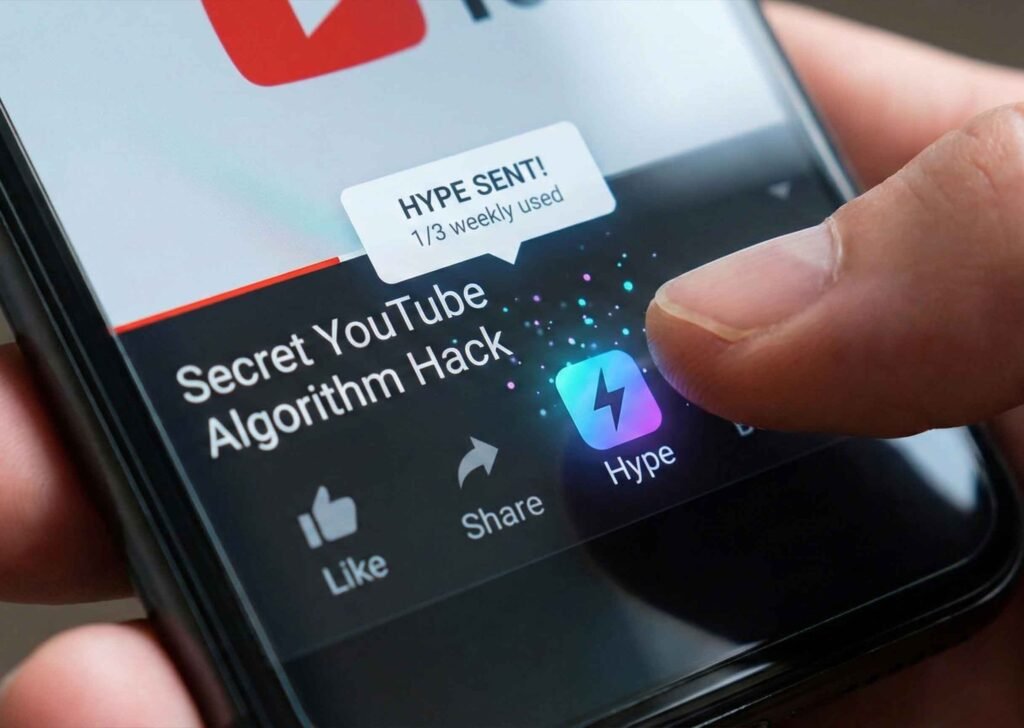
11. Likes & Hype
Likes are the lowest form of positive engagement. They help, but they are secondary. “Hype” is similar but more restricted. Since viewers only get three per week, Hype carries more weight than a standard Like. However, it still doesn’t beat a high retention rate.
12. The Dislike Button
Many people think dislikes kill a video. That is a myth! In 2026, the Dislike button is mostly used for “Personalization.” It tells the AI to show that specific viewer less of your content. However, it does not necessarily stop the video from being shown to others. In fact, I have an article that speaks more about how the dislike button can still help your videos here.
The Danger Zone: Negative Metrics
While we focus on the good, you must also avoid the bad. Certain actions can actively hurt your reach.
13. Session Ends (The Exit Penalty)
If a large percentage of users watch your video and then immediately close the YouTube app, you get penalized. The AI interprets this as a bad experience.
[Image comparing a “Session Start” share to a “Session End” exit]
14. “Don’t Recommend Channel”
This is the ultimate negative signal. If viewers are clicking this on their homepage, your channel is in trouble. It means your content is repelling the audience YouTube is trying to show it to.
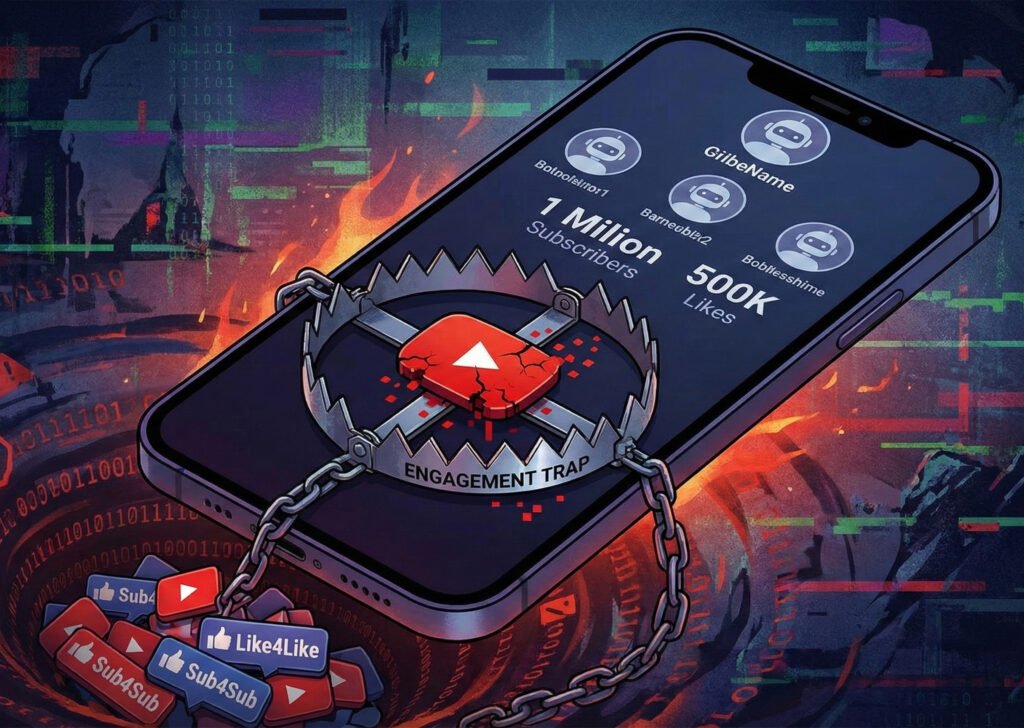
The Engagement Trap: Why Fake Growth Kills Channels
Many small creators fall into the “Engagement Trap.” They join Facebook groups or “Sub4Sub” communities to trade likes and views. However, this is a recipe for disaster.
The Math of Failure
Imagine you post an 8-minute video. If 50 people from a support group watch for only 1 minute just to “help” you and leave a like, they give you a 12.5% retention rate. For an 8-minute video, 50% is generally considered the “Magic Number” for viral growth. By accepting those fake views, you have dragged your retention down to 12%. Consequently, the algorithm sees that people are leaving early and stops recommending the video entirely. You essentially killed your video for 50 meaningless likes.
Corrupting Your Audience Profile
Furthermore, “Fake Likes” corrupt your data. The algorithm analyzes who likes your video to find “lookalike” audiences. If you make cooking videos but ask gamers to like your content, you are giving the AI the wrong map. It will try to show your cooking video to more gamers. Since they won’t click, your Click-Through Rate (CTR) will plummet. You can find more about fixing these data errors in our guide on YouTube SEO secrets.
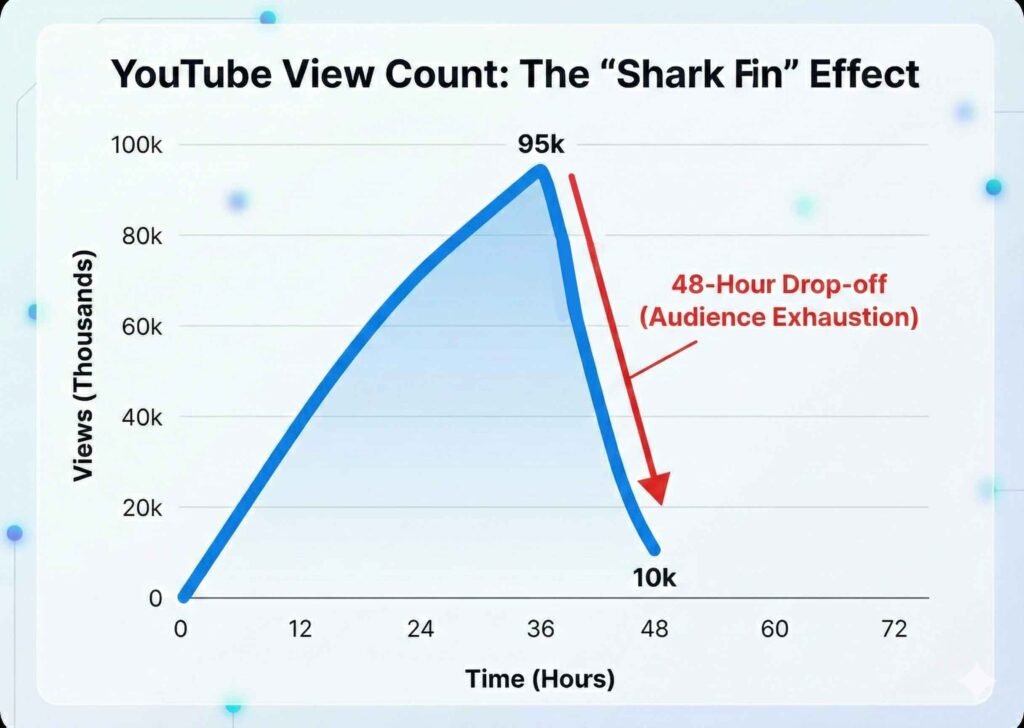
Understanding the “Shark Fin” (The 48-Hour Cliff)
Many creators panic when they see their views drop off a cliff after two days. This is often called the “Shark Fin” graph. However, this is usually a normal part of the video lifecycle.
Initially, your views come from “Notification Traffic” (your subscribers). Once YouTube finishes showing the video to your core fans, the “Freshness Boost” wears off. At this point, the video is transitioning from Browse features to Search traffic. Therefore, you should never delete a video just because the views slowed down. Instead, look at your long-term satisfaction signals to see if it will eventually pick up steam in search.
The Solution: Using Flow-State CTAs
Does this mean you should stop asking for likes? Not at all. It simply means you need to stop “paying” for them with your retention. Every time you stop the show to beg for a like, you are paying a “Retention Tax.” You are sacrificing your #1 metric to boost your #5 metric. That is a losing trade. Instead, you should aim to get the like for “free” using Flow-State CTAs.
1. Visual-Only Prompts
Instead of stopping your speech, use a silent animation on the screen. This allows you to keep delivering value while giving the viewer a visual reminder to engage. Because the content never stops, the retention stays high.
2. The Contextual Ask
Connect your request to the content itself. Instead of saying “Please like the video,” try a “Contextual Ask.” For example, you could say: “If you have ever watched a video flat-line after 48 hours and wondered why, hit like so I know I am not alone.” This validates the viewer’s struggle. Consequently, they feel like they are part of a community rather than just doing you a favor.
The “Open Loop” Comment Strategy
Once you get a comment, your job isn’t done. Most creators just “Heart” a comment and move on. However, a Heart is a conversation closer. It tells the user that the interaction is over. They will see the notification and simply swipe it away.
To truly master the algorithm, use the Heart + Open Loop method:
- Heart the comment: This triggers the initial notification.
- Reply with a question: If a user says “Great tips!”, do not just say “Thanks!” Instead, ask: “Glad it helped! Which tip are you going to try first?”
Now, the user has a reason to open the app and reply. That second click creates a “Session Start.” This is one of the highest satisfaction signals in the algorithm. You have successfully turned a passive viewer into an active, returning user.
When Is It Okay to Break the Rules?
There are rare exceptions where interrupting your video is actually beneficial.
- The “Unlock” Method: You can say, “If this video hits 1,000 likes, I will turn this into a full series.” This creates a clear goal for the community.
- The Hype Request: Since Hype is a scarce resource, you can use a “Scarcity Frame.” Remind your viewers that their Hype points help you climb the leaderboard, which supports the channel in a unique way.
Master the Machine
To grow your channel in 2026, you must stop worrying about likes and start focusing on satisfaction. Aim for high retention, encourage remixes, and embed your videos on your own platform. When you provide real value and respect the user’s time, the algorithm will naturally find an audience for you.
If you found this guide helpful, subscribe to the YT Torials newsletter for weekly algorithm updates. Also, make sure to subscribe to the YT Torials YouTube page for deep-dive video tutorials on these engineering secrets.

No responses yet