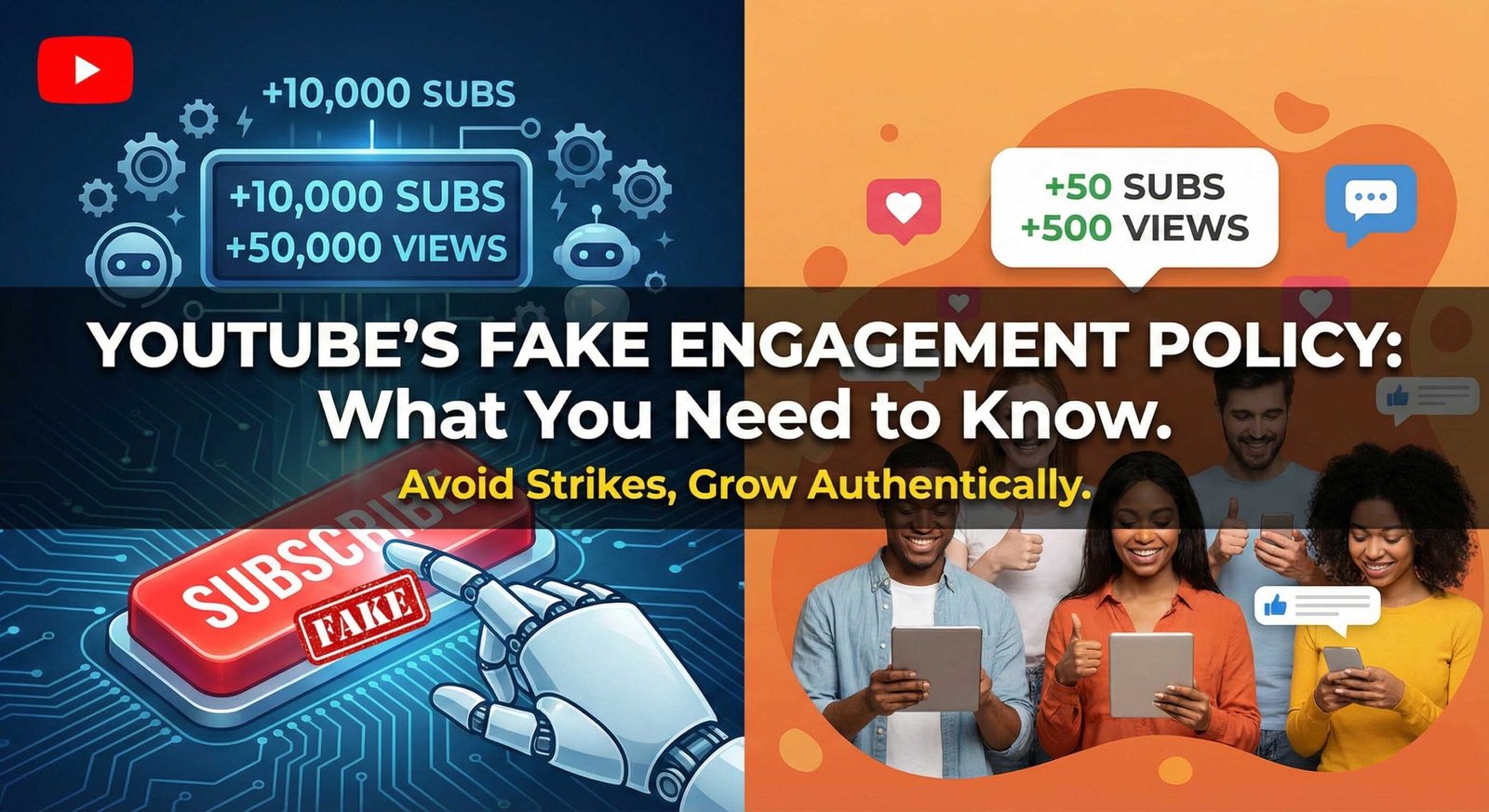
Navigating the world of YouTube growth can feel like a gold rush. Consequently, many creators feel tempted to take shortcuts to reach the 1,000-subscriber milestone or boost their view counts. However, YouTube has very strict rules regarding fake engagement. If you want your channel to last, you must understand the “Fake Engagement Policy.”
Using bots, “sub4sub” schemes, or buying views doesn’t just hurt your stats—it can lead to your entire channel being deleted. In this guide, we will break down exactly what YouTube considers illegitimate engagement and how you can grow your audience the right way.

What is the Fake Engagement Policy?
YouTube’s primary goal is to provide an authentic experience for users. Therefore, they define legitimate engagement as a human user’s primary intent to authentically interact with content. If a view or a like happens because of coercion, deception, or software, YouTube considers it fake.
The Dangers of Artificial Inflationb
Specifically, YouTube prohibits anything that artificially increases metrics like:
- Views
- Likes and Dislikes
- Comments
- Subscriber counts
If you use automatic systems or serve videos to unsuspecting viewers to pump up these numbers, you are breaking the rules. Furthermore, content that exists solely to “bribe” viewers for engagement is also banned. This means you cannot promise a prize only if someone likes or comments, as this skews the data YouTube uses to recommend videos.d any other YouTube product or feature. Keep in mind that this isn’t a complete list.

Prohibited Content and Behaviors
To keep your channel safe, you need to know exactly what types of videos and links are off-limits. Even if you have good intentions, certain actions can trigger a strike.
Third-Party Services
Many websites claim they can give you “10,000 views for $10.” While these offers are tempting, they are a direct violation of policy. You should never post content that:
- Links to or promotes third-party services that inflate metrics.
- Shows a testimonial of you successfully buying views or subscribers.
- Encourages others to use “gaming” websites to trick the algorithm.
The “Sub4Sub” Trap
The “Sub4Sub” (Subscribe for Subscribe) method is a classic mistake. This is when you tell another creator, “I will subscribe to you if you subscribe to me.” While it seems like a friendly exchange, YouTube views this as artificial. However, you are always allowed to encourage your fans to subscribe, hit the like button, or share your video naturally.
Deceptive Practices
In addition to buying stats, you cannot trick people into watching your videos. For example, if you use a misleading info card that promises a specific result but leads to a totally different video, you are violating the policy.
YouTube tracks how long people watch; hence, if everyone leaves immediately because they were tricked, your channel’s reputation will drop.

How YouTube Measures Your Engagement
You might notice that your subscriber count changes at different times. This is because YouTube uses several systems to verify that your growth is real.
Real-Time vs. Analytics
The subscriber count on your channel homepage usually updates in real-time. On the other hand, the numbers in YouTube Analytics are often delayed by about 48 hours. This delay is intentional. It allows YouTube to perform extra verification and spam reviews to ensure the numbers are accurate.
Identifying Artificial Traffic
When YouTube identifies page traffic as artificial, those views are not counted. Additionally, suspended accounts and spam subscribers are removed from your totals. Because these aren’t active human viewers, losing them shouldn’t hurt your actual watch time or revenue, but it serves as a warning that your growth methods might be flagged.
Expert Tip: If you hire a marketing agency to promote your channel, you are still responsible for their actions. If they use bots to promote your video, your channel will be the one that gets banned.
Examples
Here are some examples of content that’s not allowed on YouTube.
- A video testimonial in which a creator shows themselves successfully purchasing artificial page traffic from a third party
- A video in which a creator links to a third party artificial page traffic provider in a promotional or supportive context. For example: “I got 1 million subscribers on this video in a day and you can too!”
- A video that tries to force or trick viewers into watching another video through deceptive means (for example: a misleadingly labeled info card)
- Channels dedicated to artificial channel engagement traffic or promoting businesses that exist for this sole purpose
Remember these are just some examples, and don’t post content if you think it might violate this policy.
What happens if content violates this policy
If your content violates this policy, they’ll remove the content and send you an email to let you know. If this is your first time violating our Community Guidelines, you’ll likely get a warning with no penalty to your channel.
If it’s not, they may issue a strike against your channel. If you get 3 strikes within 90 days, your channel will be terminated. You can learn more about our strikes system here.
They may terminate your channel or account for repeated violations of the Community Guidelines or Terms of Service. They may also terminate your channel or account after a single case of severe abuse, or when the channel is dedicated to a policy violation. You can learn more about channel or account terminations here.
Conclusion
Building a successful YouTube channel is a marathon, not a sprint. While the lure of instant fame through artificial metrics is strong, the risks far outweigh the rewards. By following YouTube’s Fake Engagement Policy, you ensure that your channel remains in good standing and that your community is built on real people who truly enjoy your work.
However, engagement isn’t the only area where creators run into trouble. It is just as important to understand how you organize your content. For instance, did you know that your curated collections can also face scrutiny? To stay completely safe, you should learn the YouTube Playlist Policy and how to avoid problems with your channel organization. If you want to stay ahead of the curve and learn more expert tips on creator safety and growth, be sure to subscribe to the YT Torials newsletter and subscribe to the YT Torials YouTube page for the latest updates.
Follow YT Torials:

No responses yet